What Increases House Value Most in Coastal OBX Properties
What Increases House Value Most in Coastal OBX Properties
Reading time: 9 minutes
Table of Contents
- The OBX Market in 2026: Why Value Drivers Matter
- The Top Value-Boosting Factors
- Location Nuances Unique to the Outer Banks
- Renovations That Actually Pay Off
- Storm Resilience and Insurance Realities
- Visualizing the ROI: A Quick Comparison
- Common Challenges (and How to Beat Them)
- FAQs
- Your OBX Value-Boosting Roadmap
The OBX Market in 2026: Why Value Drivers Matter
If you own—or want to buy—property along the Outer Banks, you already know this isn’t a normal real estate market. Sand shifts, storms roll in, and buyers pay a premium for a very specific lifestyle. In early 2026, median home prices across Dare and Currituck counties are hovering around $565,000, up roughly 4.8% year-over-year according to regional MLS data, even as national appreciation has cooled to about 2.1%. That gap tells a story: OBX buyers aren’t just purchasing square footage, they’re purchasing ocean access, rental income potential, and a shrinking supply of buildable coastal land.
Here’s the straight talk: not every upgrade or feature moves the needle equally. A whirlpool tub might feel luxurious, but it won’t touch your appraisal the way a properly engineered pile foundation will. Let’s break down what actually increases value—and what’s just curb appeal noise.
The Top Value-Boosting Factors
Appraisers and local agents consistently point to a handful of factors that move the needle most in coastal North Carolina markets like Nags Head, Duck, Corolla, and Hatteras Island.
- Direct or semi-oceanfront access — proximity to the water remains the single biggest price multiplier.
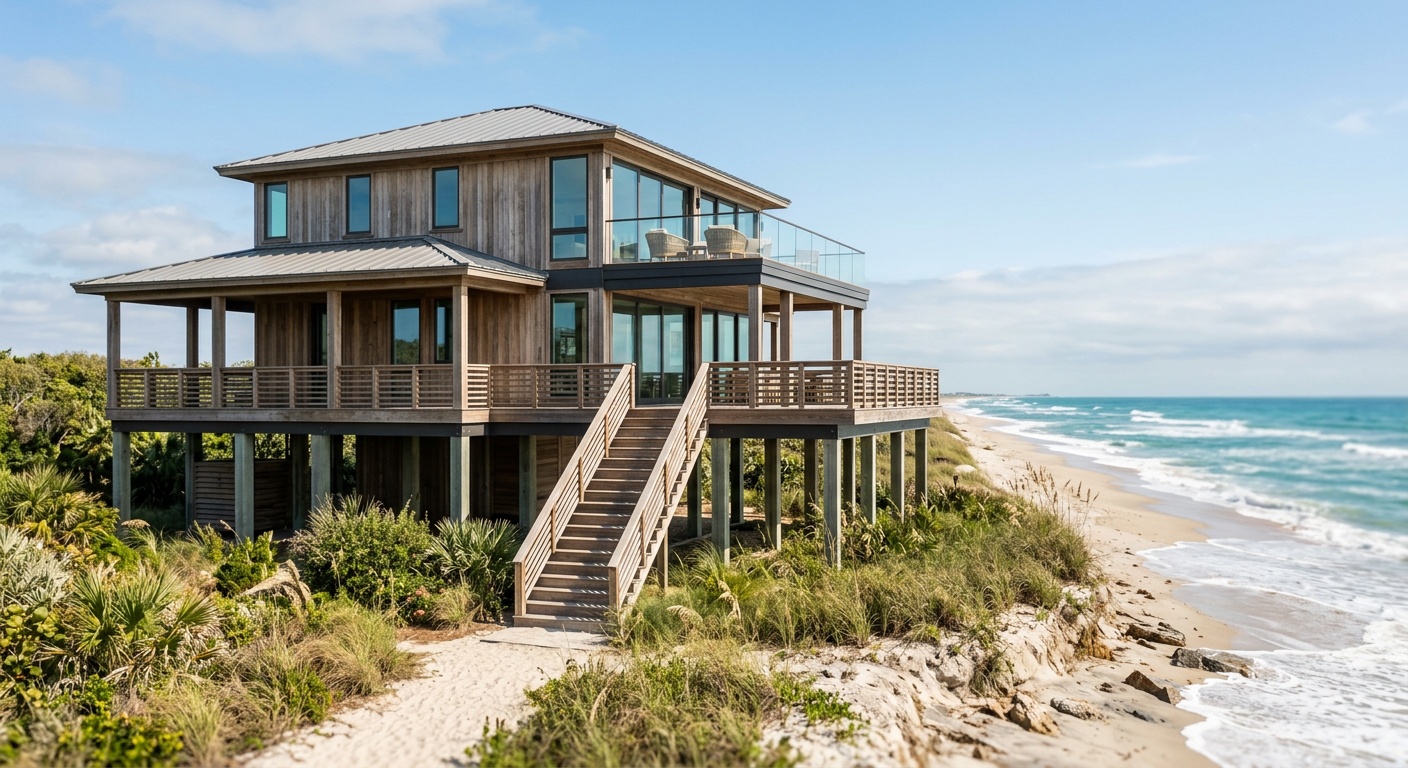
- Elevated construction and flood mitigation — homes built above current base flood elevation (BFE) requirements command higher resale values and lower insurance costs.
- Rental income history — a documented short-term rental track record (via platforms or property management companies) is increasingly treated like a financial asset, not just a bonus.
- Outdoor living amenities — private pools, hot tubs, and multi-level decks remain top requests from vacation renters and buyers alike.
- Updated systems — HVAC, roofing, and impact windows rated for coastal wind zones reduce buyer hesitation and insurance premiums.
Why Rental Income Now Outweighs Aesthetics
Quick scenario: imagine two nearly identical four-bedroom homes in Corolla. One has granite countertops and a fresh coat of paint but no rental history. The other has slightly dated finishes but a documented $58,000 in annual gross rental revenue. In 2026’s market, the second home routinely appraises higher and sells faster—sometimes by 8-12%, according to several OBX-based brokers. Buyers are underwriting these properties like small businesses, not just homes.
The Underrated Power of Flood Zone Classification
Many buyers don’t realize that a property’s FEMA flood zone designation can swing insurance costs by thousands of dollars annually—and that directly affects affordability, which affects resale value. A home in an X zone (minimal flood risk) versus a VE zone (high-velocity wave action) can see insurance premiums differ by $3,000-$6,000 per year. That single line item often determines whether a buyer can even qualify for financing.
Location Nuances Unique to the Outer Banks
Location matters everywhere in real estate, but OBX adds layers most inland markets never consider.
Distance to the Beach Access Point
Being within a five-minute walk of a public beach access ramp can add measurable premium versus a comparable home ten minutes away—renters pay attention to this detail obsessively when booking.
Soundside vs. Oceanside
Soundside properties often offer better sunset views and calmer water for kayaking, appealing to a different buyer profile than oceanside surf-and-sand seekers. Neither is universally “better”—it depends on the target renter demographic.
Renovations That Actually Pay Off
Not all renovations are created equal in a salt-air environment. Cosmetic upgrades fade fast against humidity and storms, while structural and functional improvements tend to hold value longer.
High-ROI renovations in 2026 include:
- Adding or upgrading a private pool (still the single most-requested amenity by vacation renters on the Outer Banks)
- Elevating living space above minimum flood requirements during a rebuild or major renovation
- Installing hurricane-rated impact windows and doors
- Expanding outdoor decking and adding covered porches for shoulder-season rentals
- Upgrading to standing-seam metal roofing, which resists wind uplift better than asphalt shingles
Case in point: A Kill Devil Hills investor renovated a 1980s cottage in late 2025, adding a saltwater pool and elevating the HVAC system onto a rooftop platform to avoid flood damage. Total investment was roughly $92,000. The home’s assessed value rose by an estimated $140,000, and projected annual rental income increased by nearly 30% because it now qualifies for the “private pool” filter on booking platforms—a filter that dramatically increases search visibility.
Storm Resilience and Insurance Realities
Coastal buyers in 2026 are more insurance-literate than ever. After several active hurricane seasons in the Atlantic basin, lenders and insurers scrutinize construction quality closely. Homes with reinforced pilings, break-away walls beneath living space, and documented wind mitigation inspections often qualify for meaningful insurance discounts—sometimes 10-20% off premiums. That savings gets capitalized directly into what buyers are willing to pay.
“Buyers used to ask about the view first. Now they ask about the flood zone and the roof age before they even schedule a showing,” says a longtime Outer Banks listing agent based in Nags Head.
Visualizing the ROI: A Quick Comparison
Below is a simplified comparison of estimated value impact from common upgrades, based on aggregated appraiser and agent feedback across Dare County in 2025-2026.
Comparative Table: Value Drivers at a Glance
| Feature | Avg. Cost | Est. Value Add | Rental Income Impact |
|---|---|---|---|
| Private Pool | $65,000-$95,000 | $100,000-$150,000 | +25-35% |
| Flood-Compliant Rebuild | $40,000-$80,000 | $60,000-$110,000 | +10-15% |
| Impact Windows/Doors | $18,000-$30,000 | $25,000-$40,000 | +3-5% |
| Standing-Seam Roof | $22,000-$35,000 | $20,000-$32,000 | +2-4% |
| Interior Cosmetic Refresh | $10,000-$20,000 | $8,000-$18,000 | +1-3% |
Common Challenges (and How to Beat Them)
Challenge 1: Balancing Renovation Cost Against Storm Risk
Sinking $90,000 into a pool feels risky when a named storm could threaten the coastline next season. The fix: prioritize resilience-first sequencing. Elevate and reinforce structurally before adding lifestyle amenities. A pool that survives a storm season protects your entire investment; a pool added to a vulnerable structure is money at risk.
Challenge 2: Insurance Costs Eating Into Rental Margins
Rising premiums have squeezed net rental yields across the Outer Banks. Owners are countering this by bundling wind mitigation inspections with insurance shopping every renewal cycle, often saving 12-18% by switching carriers or documenting upgrades that weren’t previously on file.
Challenge 3: Overestimating “View Premium” Without Rental Data
Some sellers assume a great view alone justifies top-dollar pricing. Smart buyers in 2026 request 12-24 months of rental platform data before making offers, which keeps view-based pricing honest and grounded in actual income performance.
Frequently Asked Questions
Does being oceanfront always guarantee the highest resale value on the Outer Banks?
Not always. Oceanfront commands a premium, but erosion risk, insurance costs, and setback regulations can offset that premium. Semi-oceanfront homes with strong rental histories sometimes outperform oceanfront properties on a pure return-on-investment basis.
Is it worth adding a pool to an OBX rental property in 2026?
For most vacation rental homes, yes. Private pools remain the top search filter for renters booking Outer Banks stays, and the income lift typically outweighs the added cost and maintenance within three to five rental seasons.
How much does flood zone classification really affect home value?
Significantly. Beyond insurance premiums, flood zone status affects financing eligibility and buyer confidence. Homes in lower-risk zones or with documented elevation compliance routinely sell faster and closer to asking price.
Your OBX Value-Boosting Roadmap
The Outer Banks market rewards owners who think like both a homeowner and a small business operator. As coastal insurance markets tighten and buyers grow more data-driven, the properties that win in 2026 and beyond will be the ones built—and upgraded—with resilience and income potential in mind, not just curb appeal.
- Step 1: Get a current flood zone and elevation certificate review before making any renovation decisions.
- Step 2: Prioritize structural resilience upgrades before cosmetic or lifestyle additions.
- Step 3: Document rental income thoroughly if you already operate as a short-term rental.
- Step 4: Shop insurance annually and log every wind/flood mitigation improvement.
- Step 5: Add a private pool or expanded outdoor living space only after resilience upgrades are complete.
So, whether you’re sitting on a decades-old cottage in Hatteras or eyeing a new build in Duck, ask yourself: is your next dollar going toward something that protects your investment, or just something that looks good in photos? The Outer Banks doesn’t forgive short-term thinking—but it rewards owners who plan for the next storm season and the next decade at the same time.