How to Increase Your Outer Banks Home’s Resale Value
How to Increase Your Outer Banks Home’s Resale Value in 2026
Reading time: 9 minutes
Salt air, storm codes, and short-term rental income potential make the Outer Banks one of the trickiest—and most rewarding—coastal markets in the country. If you own property from Corolla to Ocracoke, you already know that what boosts resale value on a mainland home doesn’t always translate here. Let’s dig into what actually moves the needle in 2026.
Table of Contents
- Why the OBX Market Plays by Different Rules
- The Renovations That Actually Pay Off
- Storm Resilience: Your Hidden Equity Builder
- Rental Income Potential and Buyer Psychology
- Common Challenges (and How to Solve Them)
- Comparing Improvement ROI: A Data Snapshot
- Your Roadmap Forward
- FAQs
Why the OBX Market Plays by Different Rules
Here’s the straight talk: Outer Banks real estate isn’t judged the same way a suburban colonial is. Buyers here are weighing three things simultaneously—lifestyle appeal, rental income potential, and resilience against nor’easters and hurricanes. According to the Outer Banks Association of Realtors, median home prices across Dare County climbed to roughly $549,000 in early 2026, up nearly 4% year-over-year, even as national coastal markets cooled. That resilience tells you something: demand for well-positioned, well-maintained OBX properties remains strong, but buyers are increasingly selective.
Quick Scenario: Imagine two nearly identical 4-bedroom homes in Duck, both listed at $875,000. One has a private pool, impact windows, and a documented rental history generating $68,000 annually. The other has neither upgrade and an outdated kitchen. Which one sells faster and closer to asking price? The answer isn’t just intuitive—it’s backed by local MLS data showing amenity-rich rentals selling 22% faster on average in 2025.
Understanding the Buyer Pool
Most OBX buyers fall into two camps: investors chasing rental yield and families seeking a personal beach retreat with occasional rental income. Both groups care deeply about turnkey condition, flood risk, and proximity to the water. A property that satisfies both camps—rental-ready but personally livable—tends to command the strongest resale premiums.
The Renovations That Actually Pay Off
Not every upgrade delivers equal value in this market. Kitchen remodels remain a safe bet, but the *type* of remodel matters. A 2025 Remodeling Impact Report specific to coastal North Carolina found that mid-range kitchen updates recouped about 78% of cost at resale, while high-end luxury renovations recouped only 61%—buyers here often prefer clean, functional spaces over ultra-premium finishes that inflate price without matching local comps.
Pro Tip: Prioritize upgrades that touch both aesthetics and function. A rebuilt deck with cable railing, for instance, does double duty—it photographs beautifully for vacation rental listings and satisfies storm-code inspectors.
Outdoor Living Spaces Still Reign Supreme
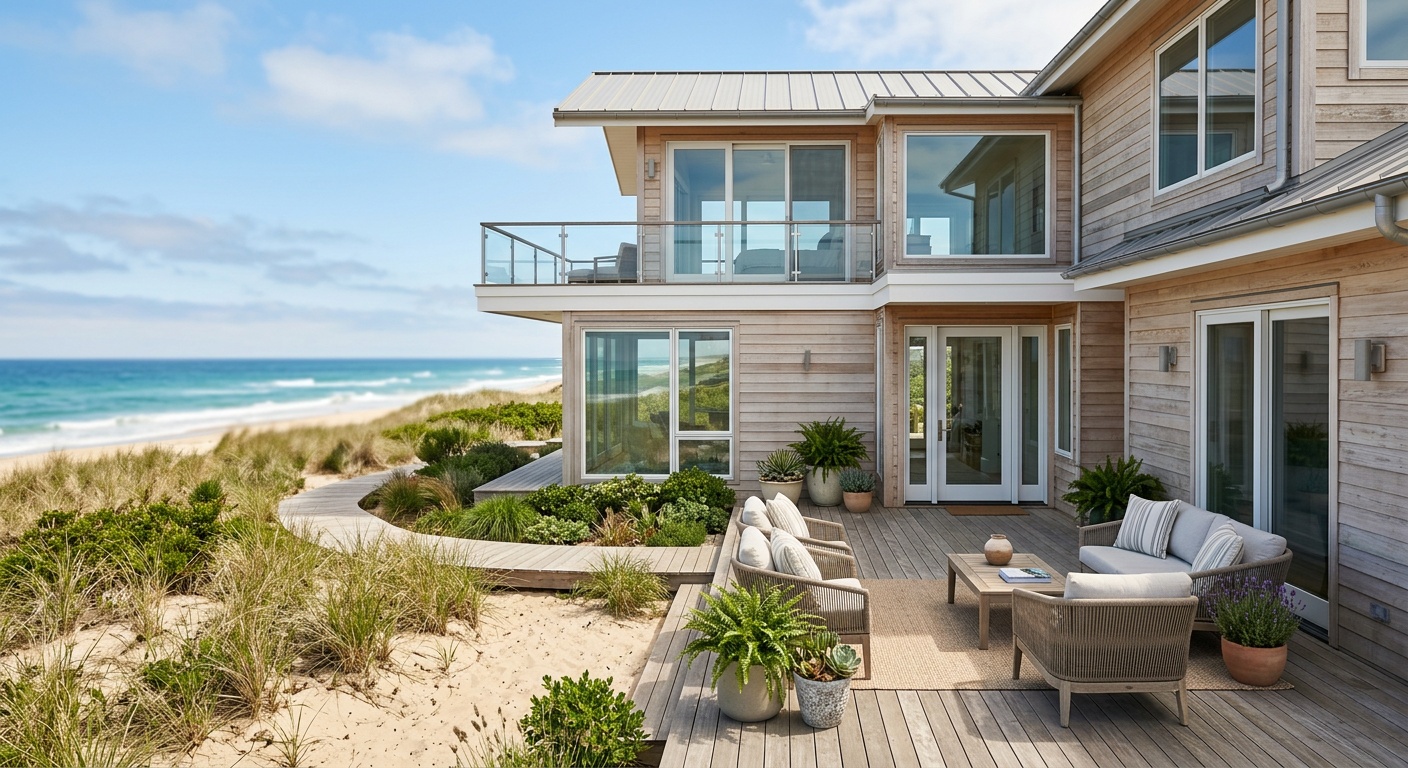
Private pools, hot tubs, and multi-level decks consistently top the list of features that Outer Banks vacation renters filter for on booking platforms. Homes with a private pool in Corolla and Duck have historically commanded 15-20% higher weekly rental rates, and that rental premium directly supports a higher resale valuation when investors run their numbers.
Storm Resilience: Your Hidden Equity Builder
Well, here’s what many sellers overlook: resilience upgrades are quietly becoming the top value driver in this region. With NOAA reporting an above-average number of named storms projected for the 2026 Atlantic hurricane season, buyers and their lenders are scrutinizing flood zones, elevation certificates, and roof age more than ever.
Case Study: A 2019-built home in Rodanthe recently sold 11% above the county’s average price-per-square-foot after the owners installed impact-rated windows, a metal roof, and reinforced pilings following FEMA’s updated flood maps. The listing agent noted that three separate offers cited the elevation certificate as a deciding factor—proof that resilience documentation isn’t just a nice-to-have, it’s a negotiating tool.
Insurance Costs Are Reshaping Buyer Decisions
Flood insurance premiums under FEMA’s Risk Rating 2.0 system have risen sharply for older, non-elevated structures. Homes that reduce a buyer’s projected insurance burden by even a few hundred dollars annually often justify a higher asking price. If you’re weighing whether to reroof or repile before selling, remember: buyers are now calculating five-year ownership costs, not just purchase price.
Rental Income Potential and Buyer Psychology
Let’s dive deep into something sellers frequently underestimate: documented rental income is arguably the single most persuasive resale asset on the Outer Banks. A property with three consecutive years of strong booking history through a reputable management company (think Twiddy, Village Realty, or Sun Realty) gives buyers concrete numbers instead of speculative projections.
According to a 2025 survey by the Outer Banks Visitors Bureau, 63% of vacation-home buyers said verified rental income history was “very important” or “extremely important” in their purchase decision—more influential than granite countertops or a home’s age.
Presentation Still Matters
Professional photography, staged interiors, and drone footage showing beach proximity aren’t just marketing fluff—they directly affect perceived value. Listings with professional drone photography in Nags Head and Kill Devil Hills sold, on average, 6 days faster in 2025 than those without, per regional MLS analysis.
Common Challenges (and How to Overcome Them)
Selling or upgrading an OBX property comes with its own set of headaches. Here are three you’ll likely face, along with practical fixes.
- Challenge 1: Salt-air deterioration. Exterior fixtures, HVAC units, and railings corrode faster here. Solution: budget for marine-grade materials upfront; they cost more initially but reduce buyer objections during inspection.
- Challenge 2: Septic and well limitations. Many older OBX homes rely on aging septic systems that concern buyers. Solution: get a septic inspection before listing and address issues proactively—it removes a major negotiation lever from the buyer’s side.
- Challenge 3: Seasonal market timing. Listing in the off-season can mean fewer showings. Solution: list in late winter (February–March) so the home is under contract before peak rental season, maximizing both sale price and transferable booking revenue.
Comparing Improvement ROI: A Data Snapshot
Below is a simplified comparison of common OBX home improvements and their estimated resale value impact, based on 2025-2026 regional remodeling and realtor data.
| Improvement | Average Cost | Est. ROI at Resale | Rental Impact |
|---|---|---|---|
| Private Pool Addition | $55,000–$75,000 | 70–85% | High |
| Impact Windows/Doors | $18,000–$30,000 | 65–75% | Moderate |
| Mid-Range Kitchen Remodel | $35,000–$50,000 | 75–80% | Moderate |
| Metal Roof Replacement | $20,000–$28,000 | 60–70% | Low-Moderate |
| Elevated Deck/Outdoor Living | $15,000–$25,000 | 80–90% | High |
Visualizing ROI by Improvement Type
As local broker Denise Hallman of a Kitty Hawk-based agency put it in a recent interview: “Buyers on the Outer Banks aren’t just purchasing a house—they’re purchasing a business plan and a storm plan at the same time. Sellers who understand that dual mindset price and prepare their homes very differently.”
Your Roadmap Forward
The Outer Banks market rewards owners who think like both a hospitality operator and a risk manager. Here’s your practical checklist for the next 12 months:
- Audit your flood and insurance status — get an updated elevation certificate; it’s often the cheapest resale booster available.
- Invest in outdoor living — decks, pools, and outdoor showers consistently deliver the strongest combined rental and resale returns.
- Document your rental history — even two seasons of clean booking data materially strengthens buyer confidence.
- Address salt-air wear proactively — replace corroded fixtures and railings before they become inspection red flags.
- Time your listing strategically — aim for a late-winter listing to capture peak-season buyer urgency.
As climate patterns intensify and insurance costs climb along the entire Atlantic coast, resilience will likely matter as much as aesthetics in coastal resale markets nationwide—not just on the Outer Banks. The owners who invest thoughtfully now are positioning themselves ahead of that curve.
So, what’s the first upgrade you’re going to tackle this year—the pool that boosts your rental numbers, or the elevation certificate that could save your next buyer thousands? Either way, start the conversation with a local appraiser or property manager before hurricane season peaks.
FAQs
Does adding a private pool always guarantee a higher resale price on the Outer Banks?
Not automatically, but it’s one of the highest-performing upgrades in the region because it directly boosts weekly rental rates, which investors factor into their offer price. In towns like Corolla and Duck, pool homes consistently outperform non-pool comps.
How much does flood zone status really affect resale value?
Significantly. Homes in higher-risk flood zones without elevation improvements often see slower sales and lower offers due to rising insurance premiums under FEMA’s Risk Rating 2.0. An updated elevation certificate can shift buyer perception and financing terms considerably.
Is it worth renovating right before selling, or should I price the home as-is?
It depends on the gap between your home’s current condition and comparable listings. If your kitchen or exterior is noticeably dated compared to nearby competition, a mid-range renovation typically pays for itself. If the home is already competitive, pricing as-is and highlighting rental income may be the smarter move.